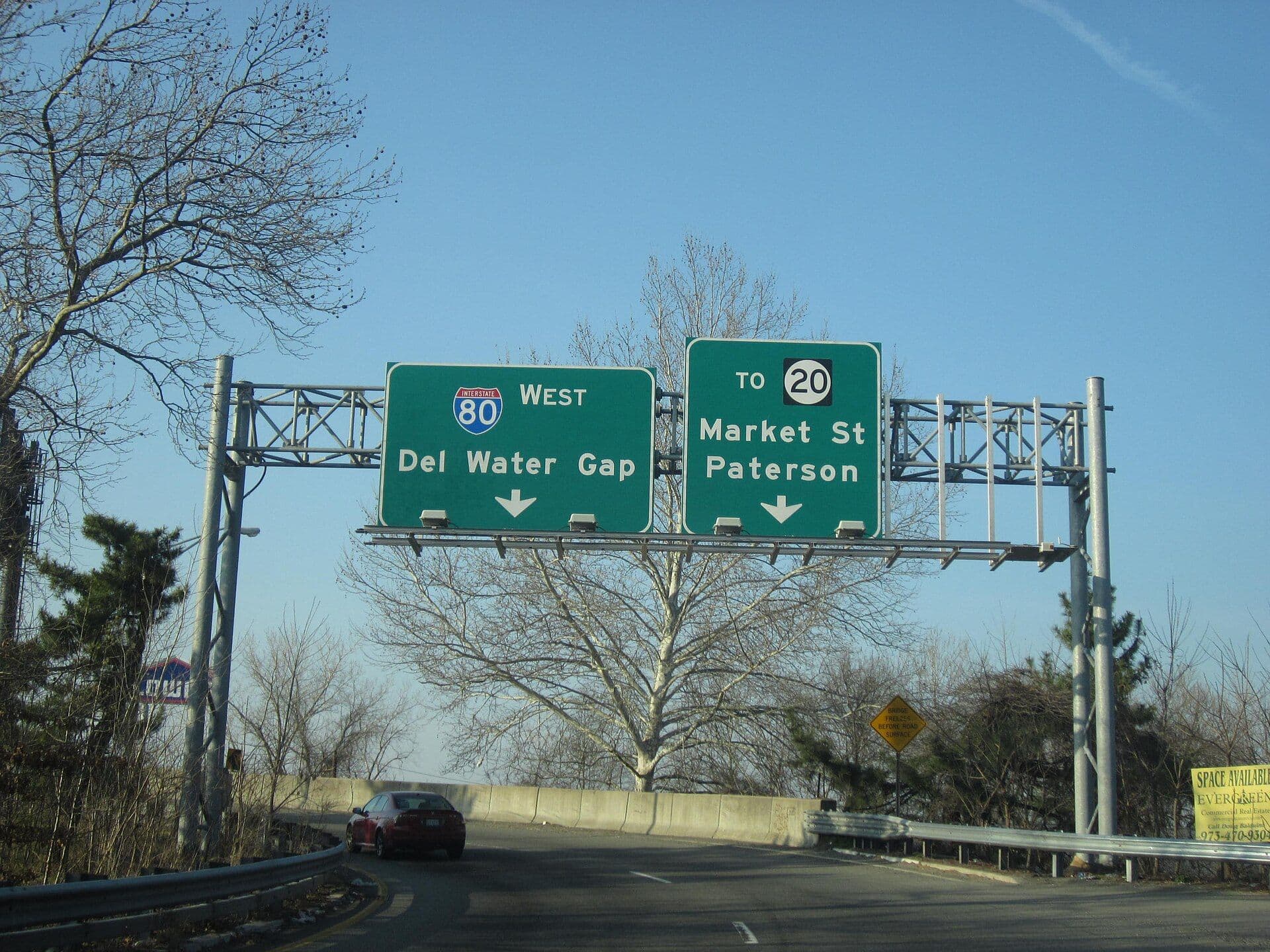
Figuring out how to price a home for sale in Passaic County is the single decision that shapes everything else about your sale. The marketing, the showings, the offers, the final number on your closing statement. All of it flows from what you put on that first listing sheet.
That said, pricing in this region is not straightforward. You have municipalities where the average home sells well above $1.5 million and others where $300,000 buys a solid single-family. The same pricing logic does not apply across the board, and that is exactly why so many sellers get this wrong.
Why Pricing Strategy Makes or Breaks Your Passaic County Home Sale
The first two weeks on market determine whether your home sells at full value or chases the market down. Buyers in this market watch new listings closely. When a property hits the market priced correctly, it generates immediate attention. When it sits, it signals a problem.
In practice, an overpriced listing does not just take longer to sell. It typically sells for less than it would have if priced accurately from the start. Buyers who see a home lingering assume something is wrong with it. They factor in the days on market when they make their offer. They negotiate harder because they sense desperation.
By contrast, a home priced at or slightly below market value attracts multiple buyers in the first week. That competition creates leverage. Sellers with three offers in hand negotiate from strength. Sellers waiting for their first showing do not.
The difference between these two outcomes often comes down to tens of thousands of dollars. That is not an exaggeration. It is what the data shows repeatedly in this market.
Understanding How to Price a Home for Sale in Passaic County Markets
This market spans everything from dense urban centers to lakefront communities bordering state parks. That diversity is the first thing sellers need to understand about pricing here.
Wayne and Little Falls draw buyers seeking larger lots and established neighborhoods. Franklin Lakes sits at the top of the region's price range, with average values well above $1.5 million. Clifton offers a mix of housing types across its various sections, from Allwood to Athenia to Delawanna. Paterson and other urban centers provide entry points for buyers who cannot afford the suburban markets.
Regional median prices reflect this blend of diverse markets. But that number means little for an individual seller. A home in Wayne competes against different inventory than one in Hawthorne. The buyer pools barely overlap.
What matters for pricing is your specific micro-market. Which homes in your immediate area have sold in the past three to six months? What did they offer that yours does or does not? How does your lot, your condition, your layout compare to what buyers actually purchased?
These questions require local answers. County-wide statistics provide context, not guidance.
What Is a Broker Price Opinion and Why You Need One
A broker price opinion pulls together the recent sales, active listings, and expired listings that define your competitive position. This is not the same as an online estimate.
Online valuations use algorithms that cannot see inside your home. They do not know you updated the kitchen or that the basement takes water during heavy storms. They cannot assess how your street compares to the one two blocks over. They work from public records and statistical models, which means they miss the details that actually drive value.
A broker price opinion starts with the same data but adds professional judgment. An experienced agent walks your property, notes its condition, and compares it to homes they have actually been inside. They know which recent sales are truly comparable and which ones involved unusual circumstances that skewed the price.
For sellers considering a more formal valuation, a licensed appraisal provides an independent opinion of value following USPAP standards. This matters particularly for estate sales, divorces, or situations where documentation of value carries legal weight. A licensed NJ home appraisal typically costs several hundred dollars for a standard single-family home, with complex or unusual properties quoted individually.
The key difference: a broker price opinion helps you decide where to list. An appraisal documents what a property is worth for legal or lending purposes. Most sellers need the former before listing and encounter the latter when a buyer's lender orders one during the transaction.
Key Factors That Determine Your Home's Value
Several variables drive value in this market. Some you can control. Others you cannot.
Square footage and lot size establish a baseline. Buyers in Wayne expect larger lots than buyers in Clifton. A quarter-acre in one market is standard; in another it commands a premium.
Condition and updates matter more than many sellers realize. A home with original bathrooms competes differently than one with recent renovations. That said, not all updates return their cost. Sellers should weigh renovation decisions carefully rather than assuming every improvement adds equivalent value.
School district ratings are available via NJDOE; buyers research independently. This is a factual consideration that affects search behavior. Buyers filter their searches based on district boundaries and state performance reports.
Proximity to transit shapes demand for certain buyers. Access to NJ Transit bus routes along Bloomfield Avenue or Route 46 connects commuters to Manhattan-bound options. West Milford buyers accept longer commutes in exchange for different lifestyle priorities.
Neighborhood-specific factors include everything from flood zone status to proximity to commercial corridors. A home in Little Falls faces different considerations than one in a lakefront community near Ringwood.
The pricing question is how these factors compare to your competition. If your home offers what sold last month for $500,000, listing at $550,000 requires justification. What do you have that the other property lacked?
Common Pricing Mistakes Sellers Make
Sellers make predictable errors. Recognizing them helps avoid repeating them.
Emotional pricing tops the list. You raised children in this home. You remember what you paid and what you put into it. None of that determines what a buyer will pay in the current market. Your sentimental value is real but irrelevant to pricing.
Overvaluing improvements runs close behind. That $40,000 kitchen renovation does not add $40,000 to your sale price. Some updates help a home sell faster or at the higher end of its range. Few return dollar for dollar. Sellers who price based on what they spent rather than what the market values end up chasing the market down.
Ignoring market feedback keeps overpriced homes on market. If three weeks pass with no offers, the market is telling you something. Sellers who wait months hoping for the right buyer typically sell for less than if they had adjusted earlier.
Failing to account for competition means listing in a vacuum. Your home does not exist alone. It competes against every other listing in your price range. If better options exist at your asking price, buyers choose those instead.
Starting high to leave room for negotiation backfires more often than it works. Buyers in this market do their research. They know when a home is overpriced. Rather than make an offer and negotiate, they simply skip the listing entirely. You never get a chance to negotiate if no one schedules a showing.
The Role of Professional Appraisals in Your Pricing Decision
A broker price opinion and a licensed appraisal serve different purposes. Understanding the distinction helps sellers decide when each makes sense.
A broker price opinion is a professional estimate prepared by a licensed real estate agent. It informs your listing decision but does not carry the weight of a certified appraisal for lending or legal purposes.
An appraisal follows USPAP standards and produces a document that banks, attorneys, and courts accept as an independent valuation. Licensed appraisers inspect the property, research comparable sales, and apply standardized methodology to arrive at a value opinion.
Most sellers encounter an appraisal during the transaction when the buyer's lender orders one. If the appraisal comes in below the contract price, it creates a problem. The buyer may need to bring additional cash to closing or renegotiate the price.
Some sellers order pre-listing appraisals to establish value before marketing. This makes sense when the property is unusual, when comparable sales are limited, or when the seller wants independent confirmation of value before setting a price. For estate sales where documentation matters for tax purposes, an appraisal becomes essential rather than optional.
For guidance on pricing strategies in Northern New Jersey more broadly, that overview covers the regional context that applies here.
Strategic Pricing Techniques That Attract More Buyers
Pricing strategy involves more than picking a number. How you position that number affects who sees your listing and how they respond.
Search threshold pricing recognizes that buyers filter by price. A home listed at $505,000 does not appear in searches capped at $500,000. Pricing at $499,000 captures those buyers. The difference in net proceeds is negligible. The difference in exposure is not.
Slightly below market generates urgency. When buyers see a well-priced home, they know others see it too. That recognition prompts faster action. Multiple offers in the first week create competition that often pushes the final price above the asking price.
Round number psychology affects perception. $499,000 feels meaningfully cheaper than $500,000 even though the difference is negligible. Buyers respond to these signals whether they consciously recognize them or not.
Pricing for the buyer pool means understanding who actually purchases homes in your price range. Entry-level buyers face different constraints than move-up buyers. Investors calculate differently than owner-occupants. Your price positions your home in front of a specific audience.
The goal is generating offers. An empty open house produces no negotiating leverage. A home with three offers in week one sells from strength. Strategic pricing creates that outcome.
When and How to Adjust Your Price if Your Home Isn't Selling
Market feedback arrives faster than most sellers expect. If the first few weeks produce showings but no offers, the problem is usually price.
Reading the signals requires honesty. Compliments from visitors mean nothing without an offer to back them up. Feedback that the home is "nice but a little pricey" tells you exactly what you need to hear.
Timing reductions matters. Small reductions spread over months signal uncertainty. A meaningful adjustment made decisively reads differently than a slow drip of $5,000 cuts.
The first reduction should be significant enough to change your competitive position. If your home needs to drop from $525,000 to $485,000 to compete, making it $510,000 wastes another three weeks. The market already told you where you need to be. Getting there faster nets more than getting there slowly.
Reductions reset buyer attention. Buyers who dismissed your listing at the original price see the reduction notice and take another look. This only works if the new price makes sense. A reduction that still leaves you overpriced does not generate renewed interest.
Know when to pull and relist. Sometimes a listing accumulates too many days on market to recover. Withdrawing, making improvements, and relisting at a different price point can reset buyer perception. This is not a first option, but it exists.
FAQ
How do I find out what my home is worth in Northern New Jersey?
Start with a broker price opinion from a local agent who knows your specific municipality. Online estimates provide a starting point but miss property-specific factors. For situations requiring formal documentation, a licensed residential appraisal follows USPAP standards. A New Jersey home valuation consultation walks through both options.
Should I price my home higher to leave room for negotiation?
No. Buyers in this market research comps before scheduling showings. An overpriced listing does not attract lowball offers to negotiate upward. It attracts no offers at all. Pricing accurately from day one generates more interest and typically results in stronger final numbers than starting high and reducing.
How accurate are Zillow and online home value estimates for Northern New Jersey?
Online estimates work from algorithms and public records. They cannot assess condition, updates, or local factors that drive value. In diverse markets where Wayne and Paterson follow completely different pricing dynamics, algorithmic estimates frequently miss by significant margins. Use them as a starting point, not a final answer.
What happens if I price my home too high from the start?
Your listing accumulates days on market while comparable homes sell. Buyers who see the high price skip your listing entirely. Those who do visit use the days on market as negotiating leverage. After several weeks, you reduce the price anyway, but now you are chasing a market that has moved.
How long should I wait before reducing my price?
If the first two to three weeks produce showings but no offers, the feedback is clear. Waiting longer does not improve your position. A meaningful reduction in week three or four often works better than small cuts spread over months.
Does renovating my home before selling increase the sale price enough to be worth it?
It depends on the renovation and the market. Minor updates like paint and flooring often help a home show better and sell faster. Major renovations rarely return their full cost. The question is whether the investment moves you from your current competitive position to a meaningfully better one.
What is the difference between a broker price opinion and an appraisal?
A broker price opinion is a professional estimate from a licensed agent that informs your listing decision. An appraisal follows USPAP standards, is performed by a licensed appraiser, and produces documentation that lenders, attorneys, and courts accept.
How do seasonal factors affect pricing in Northern New Jersey?
Fall and winter listings face smaller buyer pools but also less competition. Serious Q4 buyers often have urgency from relocations or lease expirations. Price based on current inventory rather than waiting for spring.
Pricing a home in this market is not about picking a number you like. It is about positioning your property accurately against the competition and generating offers in the first two weeks. If you want to understand what current market conditions mean for your specific property, request a valuation review to start the conversation.
Hero photo: Dougtone / Wikimedia Commons, CC BY-SA 2.0