
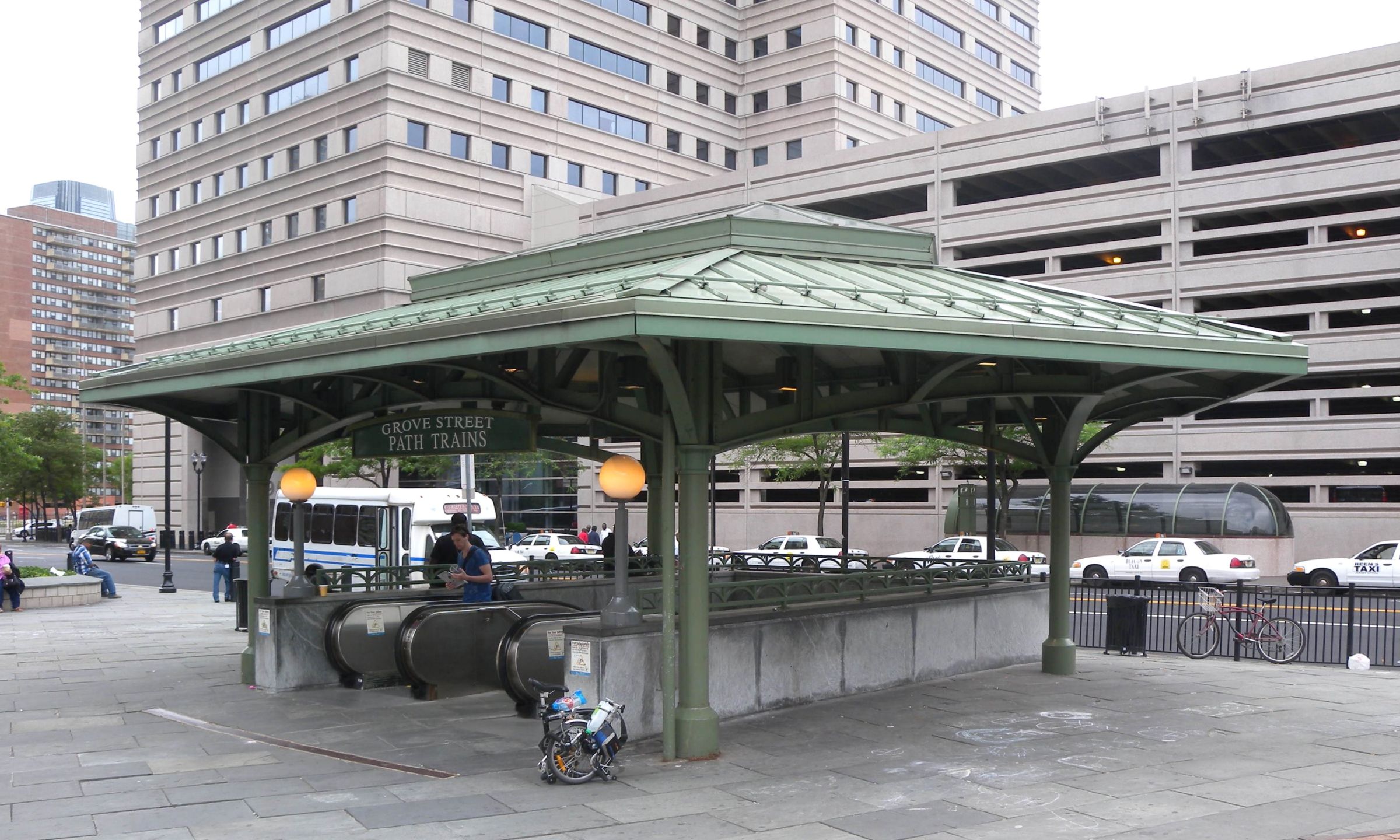
The morning light hits the Grove Street PATH plaza around 7:15 AM, and the foot traffic tells you everything. Commuters stream toward the turnstiles with coffee cups from the corner bodega, briefcases tucked, AirPods in. By 7:30, the platform fills. By 7:45, you're stepping off at the PATH terminal in Lower Manhattan. This is the commute reality that pulls buyers across the Hudson, and it's the baseline fact of Jersey City real estate: Manhattan access in under fifteen minutes, at a fraction of Manhattan prices.
But the PATH commute is just the entry point. Jersey City contains multitudes. Walk ten blocks from that Grove Street plaza in any direction and the streetscape shifts. Victorian brownstones give way to pre-war walk-ups. Luxury high-rises overlook former industrial lots now sprouting mixed-use developments. A converted warehouse hosts artists' studios on one floor and tech startups on the next.
This guide walks you through what actually matters when buying here: which neighborhoods feel like what, where the prices sit today, how Jersey City stacks against Hoboken (the comparison many buyers consider), and what buyers relocating from Manhattan wish they'd known before signing a lease or a purchase contract.
The Lay of the Land
Jersey City's transformation from industrial port city to major urban center happened in waves. The waterfront redevelopment started in the 1980s. Exchange Place's office towers drew financial services firms in the 1990s. The residential boom followed, and it hasn't stopped.
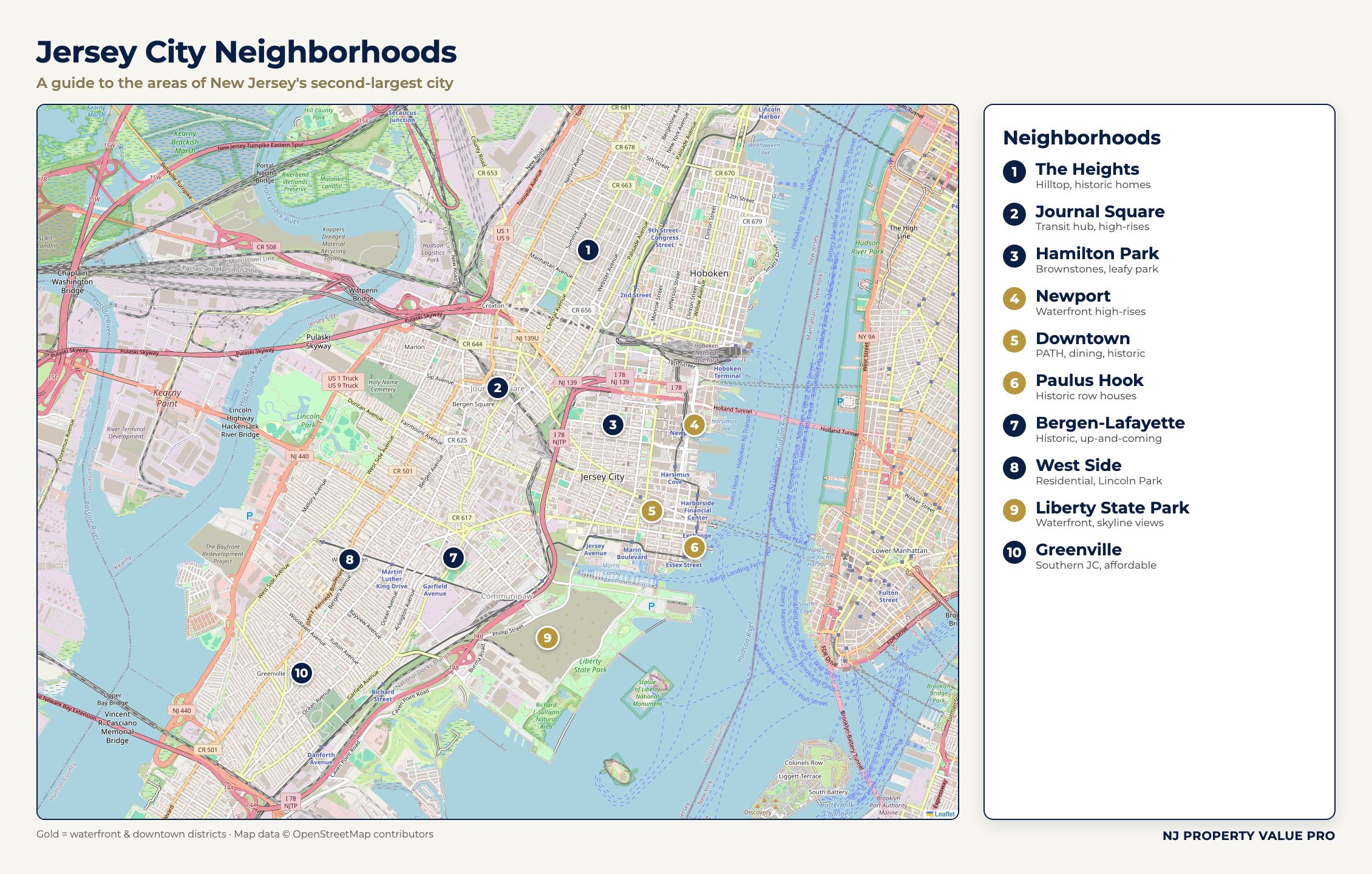
The population now exceeds 290,000, making it New Jersey's second-largest city by population. More relevant for buyers: the housing inventory reflects that scale. Per Redfin data, July 2026 showed 869 active listings across all property types, up 8.2% year over year. That inventory depth means choice. Unlike smaller Hudson County towns where a buyer might see the same thirty condos recycled for months, Jersey City offers enough variety that you can be selective about building, block, and price band.
The draw for buyers relocating from Manhattan is straightforward. The PATH runs to Lower Manhattan and to Midtown via Hoboken and 33rd Street. The NY Waterway ferry connects multiple Jersey City terminals to Wall Street. The Holland Tunnel puts drivers in Lower Manhattan in under ten minutes at off-peak hours (though peak-hour tunnel traffic is a separate conversation).
Downtown / Exchange Place
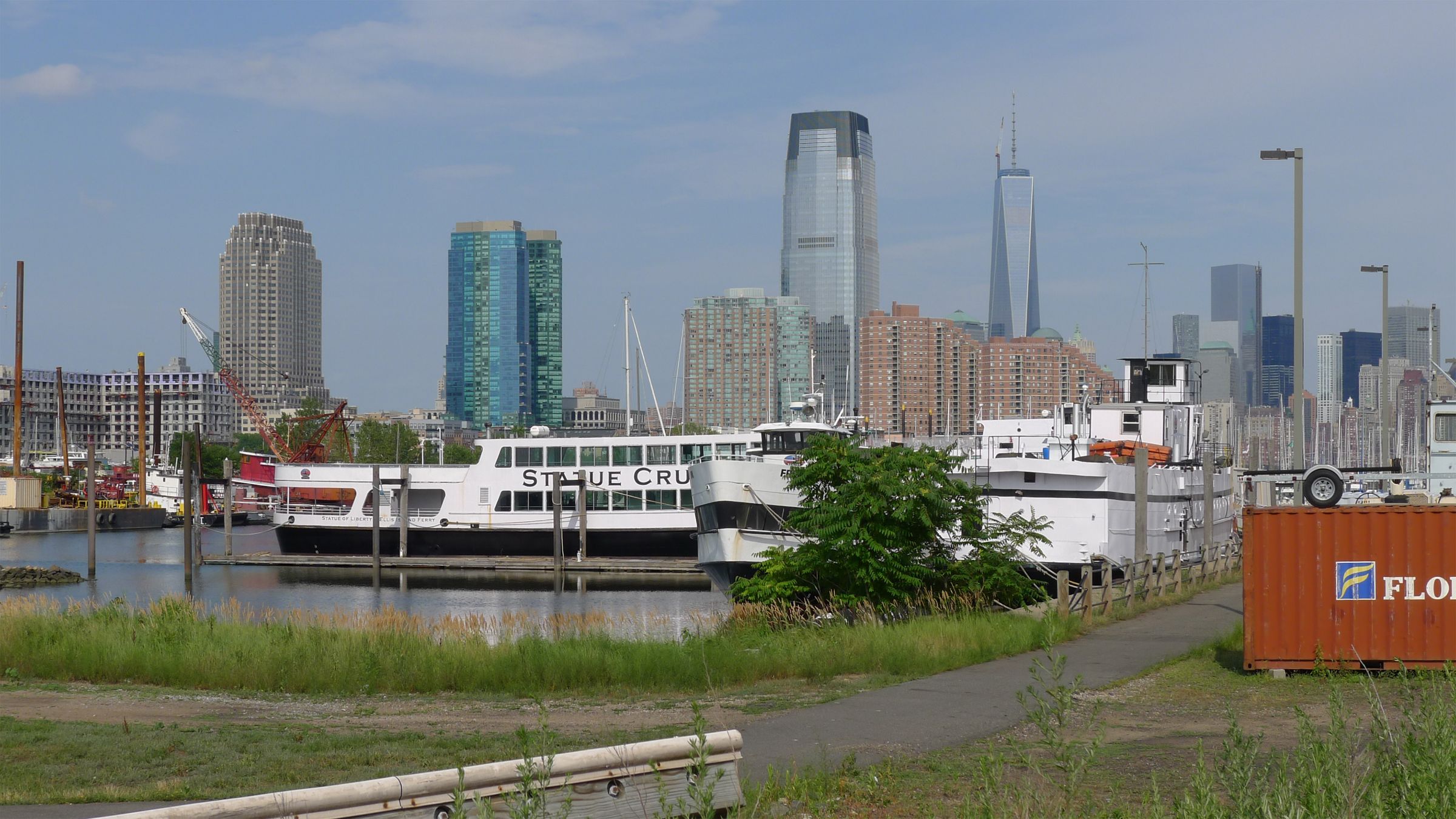
This is the financial district: glass towers, suits on the sidewalk, lunch spots packed at noon. Exchange Place sits directly on the PATH, one stop from Lower Manhattan. The waterfront promenade runs along the Hudson, and the views of Lower Manhattan from Paulus Hook and Exchange Place are among the best in the metro area.
Median prices in Downtown run around $895,000. Inventory tends toward newer high-rise condos with doormen, gyms, and parking garages. HOA fees reflect those amenities, often $700 to $1,200 per month depending on the building.
Paulus Hook
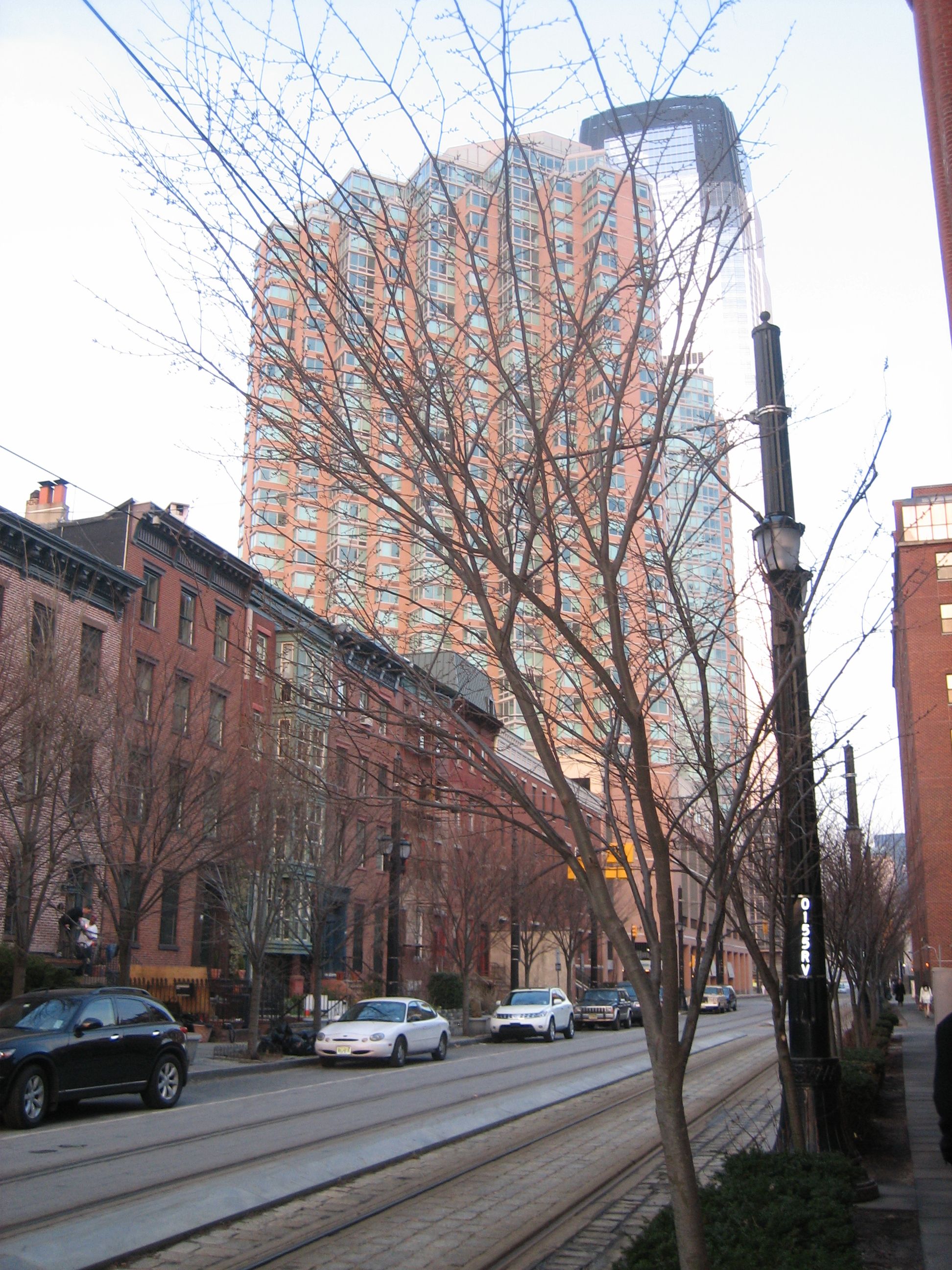
Adjacent to Downtown but with a different rhythm. Paulus Hook is where the brownstones start. Tree-lined streets, a central park at the heart of the neighborhood, a farmer's market on weekends. The architecture shifts from glass to brick. The restaurants lean neighborhood-spot rather than business-lunch.
Prices track similar to Downtown, often $900,000 and up for a brownstone unit or small townhouse. The PATH at Exchange Place is a ten-minute walk. The ferry terminal at Paulus Hook offers direct service to Wall Street.
The Waterfront (Newport and surroundings)
The Waterfront runs along the Hudson from roughly Newport north toward Hoboken. Newport itself is a planned development with its own PATH station, a mall, and a cluster of high-rise residential towers. The waterfront promenade connects to Liberty State Park to the south and the Hoboken waterfront to the north.
Median prices in Newport reach $1,295,000 for newer inventory. The Waterfront area overall runs around $949,000. These are the glass-and-steel buildings with Hudson River views, rooftop pools, and concierge desks.
The Heights
The largest neighborhood by inventory. The Heights sits on the bluff above Downtown, literally uphill. The elevation gives it a different character: more air, more sky, longer views. The housing mix is eclectic. Pre-war apartment buildings, single-family colonials, multi-family conversions, and newer condo developments all coexist.
July 2026 showed 210 listings in The Heights, more than any other Jersey City neighborhood. Prices range from $250,000 entry-level condos to $2.7 million for larger single-family homes, with a median around $847,500.
The commute adds ten to fifteen minutes compared to Downtown. The Hudson-Bergen Light Rail runs along the western edge, connecting to Hoboken Terminal and points south. Several bus lines run to Journal Square PATH.
Journal Square
Journal Square is the geographic center of Jersey City and a major PATH hub. The station sits at the intersection of John F. Kennedy Boulevard and multiple bus lines, making it one of the most transit-connected spots in the city. Historic architecture anchors the square, with ongoing restoration efforts preserving the neighborhood's character.
Median prices around $609,500 put Journal Square well below the waterfront neighborhoods. The housing types are older: pre-war apartment buildings, multi-family homes, and an increasing number of renovated units as the neighborhood attracts investment.
McGinley Square
Just south of Journal Square, McGinley Square is smaller and more residential. The median sits around $556,500, the lowest among the major neighborhoods. Housing types are similar to Journal Square: multi-family conversions, older rowhouses, some newer condo developments.
Bergen-Lafayette
South of Downtown, Bergen-Lafayette is one of Jersey City's most architecturally varied neighborhoods. The architecture mixes Victorian homes, brick rowhouses, and industrial conversions. Lincoln Park, one of the city's largest green spaces, sits at the southern edge.
Inventory runs around 114 listings with prices from $165,000 to over $1.5 million, though the median sits closer to $599,000.
Greenville
The southernmost neighborhood, Greenville is the farthest from the PATH core. Prices start lower here, with entry points under $200,000 and a median around $599,000. The housing includes single-family homes with yards, which are harder to find in the northern neighborhoods.
What It Feels Like to Live Here
Saturday mornings bring farmer's markets in Paulus Hook. Sunday afternoons see strollers along the waterfront promenade and visitors at Liberty State Park. The pace is urban but not frantic.
The daily rhythm depends on your neighborhood. Downtown moves at a financial-district clip: coffee at 6:45, PATH by 7:15, home by 7 PM. The Heights has a slower morning tempo. Journal Square buzzes around the PATH station and quiets on the residential blocks behind it.
Weekend errands differ too. Downtown has the grocery stores, pharmacies, and dry cleaners within walking distance. The Heights requires more planning or a car for bigger shopping runs. Greenville feels suburban in its pacing.
Dining and Culture
Jersey City's dining scene reflects its neighborhood variety. Newark Avenue between Grove Street and Jersey Avenue is sometimes called "Little India," with a concentration of Indian restaurants, grocery stores, and sweet shops. Grove Street itself has the Downtown concentration: coffee shops, brunch spots, cocktail bars.
The Heights has its own strip along Central Avenue with Latin American eateries, bakeries, and neighborhood spots. Journal Square is seeing new restaurants open as the area develops.
Mana Contemporary is a 2-million-square-foot arts center in a former tobacco factory, housing galleries, artist studios, and event spaces. The neighborhood hosts multiple performance venues and gallery spaces throughout Downtown and the waterfront areas.
The Hudson River Waterfront Walkway connects Jersey City's waterfront to Hoboken's, offering a continuous path for running, biking, and walking. Kayak launches at various points. Ferry service to Manhattan is both commute option and recreational ride.
Jersey City vs Hoboken: Making the Right Choice
This comparison comes up in every buyer consultation. Both cities sit on the Hudson, both offer PATH access, both attract buyers relocating from NYC. The differences are real.
Size and scale. Jersey City's population is roughly four times Hoboken's. That translates to more inventory, more neighborhood variety, and more anonymity. Hoboken is a mile square. You'll run into your neighbors. Jersey City is big enough that you can live in The Heights and rarely cross paths with someone from Newport.
Price points. Jersey City's YTD 2026 median for condos runs $700,000 (per HCMLS agent-provided data). Hoboken condos run higher on average. But the bigger gap is in single-family homes: Jersey City's YTD single-family median sits at $675,000, while Hoboken single-family homes typically close well above $2.3 million.
Commute. Hoboken Terminal is the PATH hub for Hoboken and the ferry terminal for NY Waterway. Jersey City has multiple PATH stations (Grove Street, Exchange Place, Newport, Journal Square) plus ferry service from Paulus Hook.
Nightlife and dining. Hoboken's Washington Street is a concentrated bar-and-restaurant strip. Jersey City's dining and nightlife is more dispersed. If you want walkable concentration, Hoboken wins. If you want variety and discovery, Jersey City offers more range.
For a deeper look at the Hoboken side of this equation, see our Hoboken neighborhoods guide.
What to Expect When Moving to Jersey City from NYC
NJ taxes vs NY taxes. New Jersey has no city income tax (unlike NYC's 3-4%). But New Jersey property taxes are significantly higher than NYC's. A Jersey City condo assessed at $400,000 might carry property taxes of $10,000 to $14,000 annually, depending on the building and assessment ratio.
PATH vs subway. The PATH runs 24/7 but with longer headways than the NYC subway, especially late night and weekends. Midtown connections require a transfer at Hoboken or 33rd Street. The Lower Manhattan line is direct.
Parking and car ownership. Street parking is easier than Manhattan. Building parking typically runs $150 to $350 per month depending on neighborhood and building.
What buyers relocating from Manhattan wish they knew: Tour neighborhoods on weekday mornings and Saturday afternoons. The commute reality and the weekend vibe are both part of your daily life.
Jersey City Real Estate Market Snapshot: Q3 2026
Inventory: 869 active listings across all types, up 8.2% year over year (per Redfin). Condo inventory specifically is up 22.9% year over year, with 660 active listings (per HCMLS agent-provided data). Single-family inventory is tighter at 70 listings, up 7.7%.
Median sale prices: $695,000 for condos (down 6.7% YoY), $735,000 for single-family homes (down 7% YoY). These declines reflect price corrections after the 2021-2023 run-up, not a market in distress. YTD condo median holds flat at $700,000; YTD single-family median is $675,000, up 2.3% year over year.
Days on market: 30 days for condos, 26 days for single-family homes (July 2026). Both are down year over year, meaning well-priced properties are moving.
What this means for buyers: condo inventory is deep enough to be selective. Negotiate on properties listed thirty-plus days. Single-family homes still move quickly.
For buyers ready to start the search, a buyer property evaluation can help identify which neighborhoods and price bands fit your situation.
Schools, Parks, and Family Life
Jersey City Public Schools is a large district. Performance differs by catchment area; buyers should research specific schools through NJDOE School Performance Reports rather than making assumptions about the district as a whole.
Public schools: Jersey City Public Schools operates elementary, middle, and high schools across the city. McNair Academic High School is a competitive-admission magnet school.
Parks: Liberty State Park is the marquee green space, with 1,200 acres along the waterfront, views of the Statue of Liberty, and ferry access to Ellis Island. Lincoln Park in Bergen-Lafayette offers a lake, tennis courts, and a golf course.
Honest Trade-offs
Property taxes. New Jersey property taxes are high. Jersey City's effective rate is lower than some suburban towns but still substantial.
Parking. Street parking is competitive in Downtown and the waterfront neighborhoods. Building parking costs add up.
Commute variability. PATH service is reliable but not immune to delays. Rush hour trains get crowded.
Construction activity. Jersey City is still building. Cranes are common. Construction noise affects some blocks.
School variability. Public school quality differs significantly by catchment. Do school-specific research.
Who This Neighborhood Suits
Direct PATH access to Lower Manhattan: Exchange Place, Paulus Hook, and Newport put you on the PATH in minutes. The ferry from Paulus Hook lands at Pier 11 Wall Street in under ten minutes.
PATH access to Midtown: Grove Street and Journal Square connect to Hoboken, where you transfer to the 33rd Street PATH. Total commute runs twenty-five to forty minutes.
Brownstone architecture at lower price points: Jersey City's brownstone inventory in Paulus Hook offers similar architecture at lower price points.
Larger properties with yards: The Heights and Greenville offer larger properties, yards, and a more residential feel.
How to Start Your Jersey City Home Search
Start with the commute. Map your office. Run the PATH schedule from different stations. Time the walk from different neighborhoods to their closest transit.
Second, tour different neighborhoods on different days. A Saturday afternoon in Paulus Hook feels different from a Tuesday morning.
Third, get pre-approved with a lender who knows the Jersey City market. Local lenders understand building-specific issues that can affect financing.
Fourth, work with an agent who knows the block-level differences. The median price for a neighborhood tells you something. The price difference between two blocks within that neighborhood tells you more.

FAQ
Is Jersey City a good place to buy a home in 2026?
Jersey City offers strong value for buyers seeking PATH access to Manhattan at price points below comparable NYC neighborhoods. Condo inventory is up 22.9% year over year, giving buyers negotiating leverage on listings past thirty days. Single-family inventory remains tighter.
What is the average home price in Jersey City right now?
The July 2026 median sale price was $695,000 for condos and $735,000 for single-family homes (per HCMLS agent-provided data). Prices vary significantly by neighborhood: Downtown and Waterfront medians exceed $890,000, while Journal Square and McGinley Square sit closer to $556,000 to $610,000.
Which Jersey City neighborhoods offer park proximity and walkable streets?
Paulus Hook offers walkable streets, a central green space, and ferry access. The Heights provides larger properties and more residential blocks. Bergen-Lafayette offers access to Lincoln Park. School catchments differ by neighborhood; research specific schools through NJDOE School Performance Reports.
How long is the commute from Jersey City to Manhattan?
PATH trains from Exchange Place reach Lower Manhattan in under ten minutes. Grove Street to Lower Manhattan runs about twelve minutes. Journal Square to Lower Manhattan runs eighteen to twenty minutes. The Paulus Hook ferry reaches Pier 11 Wall Street in under ten minutes.
What are current crime statistics in Jersey City?
The Jersey City Police Department publishes UCR crime statistics. Consult current data for specific areas through the department's published reports.
Should I buy in Jersey City or Hoboken?
Jersey City offers more inventory, greater neighborhood variety, and lower single-family home prices ($675,000 YTD median vs. Hoboken's average above $2.3 million). Hoboken offers a more compact, walkable town with concentrated nightlife along Washington Street. The right choice depends on whether you prefer scale and variety (Jersey City) or compact walkability (Hoboken).
What are property taxes like in Jersey City?
New Jersey property taxes are based on assessed value, which is typically lower than market value. Jersey City's effective tax rates run roughly 2% to 2.5% of assessed value. A condo assessed at $400,000 might carry annual taxes of $8,000 to $10,000.
What should I know about Jersey City schools?
Jersey City Public Schools serves K-12 across the city. School quality varies significantly by catchment. McNair Academic High School is a competitive-admission magnet school with strong performance. Review NJDOE School Performance Reports for specific school ratings.
If you want to understand what these market conditions mean for your specific property, request a New Jersey home valuation.
Hero photo: King of Hearts / Wikimedia Commons, CC BY-SA 4.0