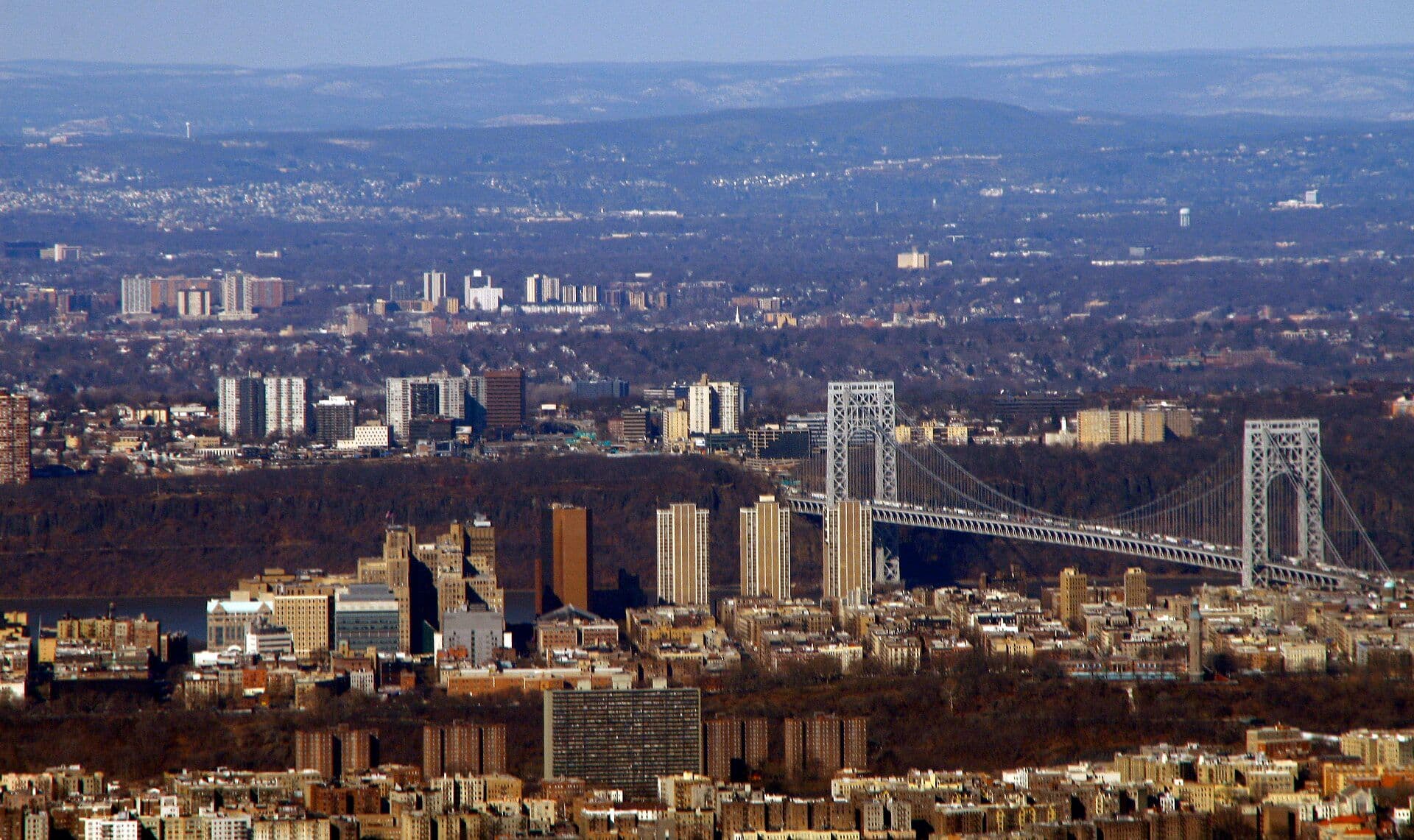
The morning light hits Fort Lee differently depending on where you stand. From the upper floors of Horizon Road's high-rises, the sun rises behind the Manhattan skyline, throwing long shadows across the Hudson before flooding your east-facing windows. Down on Main Street, the same hour smells like fresh bread from the Korean bakeries and sounds like delivery trucks double-parked outside H Mart. By 7:15 AM, the 158 bus has already loaded its first wave of commuters headed for the Port Authority.
Fort Lee is a town of elevations and contrasts. The Palisades cliffs create a dramatic western edge to the Hudson River, and the town has built upward to match. But walk ten blocks inland and you find tree-lined residential streets with colonials and split-levels. The George Washington Bridge looms over everything, a constant reminder that Manhattan is eight minutes away by car (or forty-five minutes during rush hour, depending on your relationship with the truth).
This guide covers what living in Fort Lee NJ actually feels like, block by block.
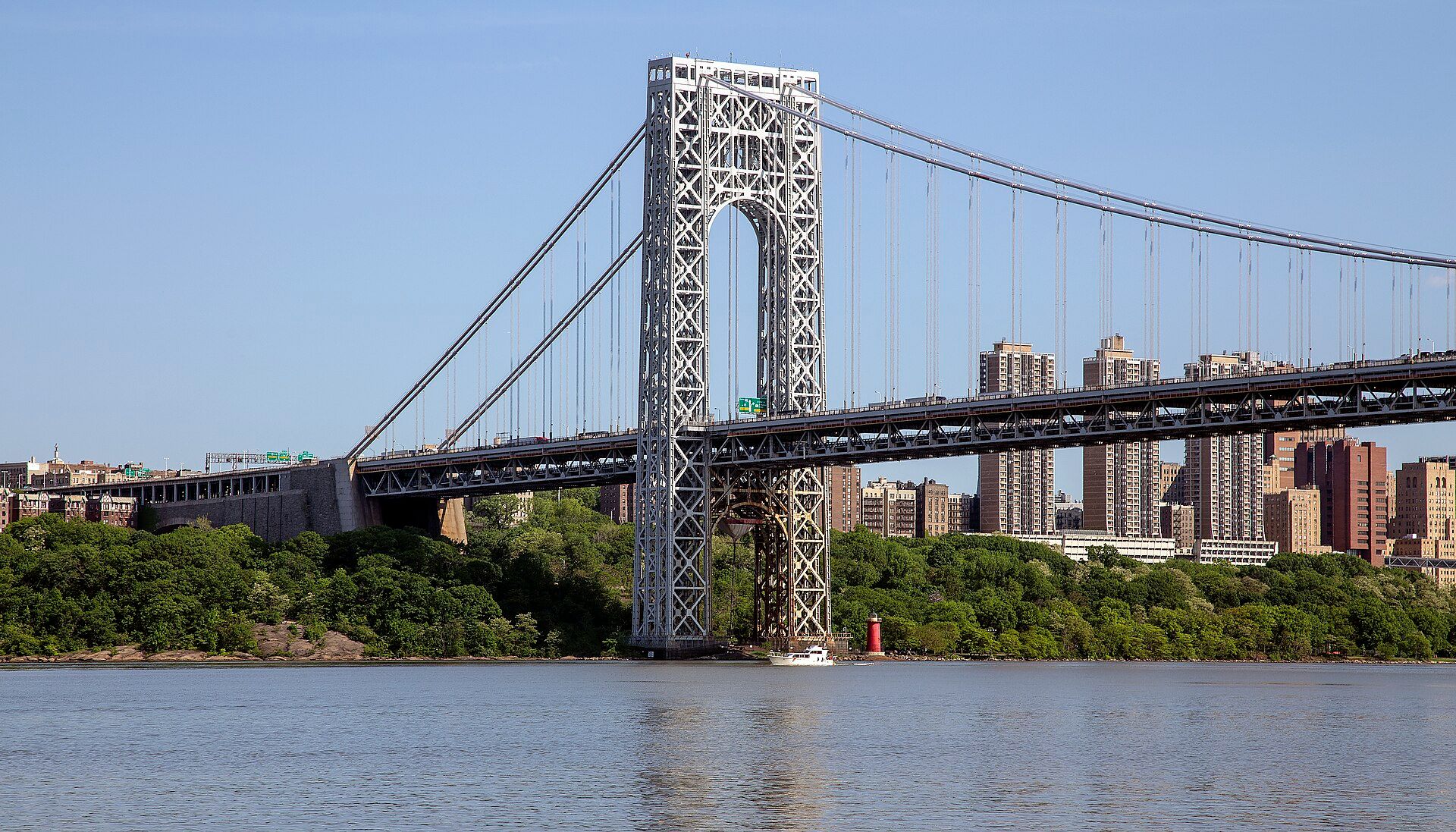 Photo: Acroterion / Wikimedia Commons, CC BY-SA 4.0
Fort Lee NJ Real Estate: The Lay of the Land
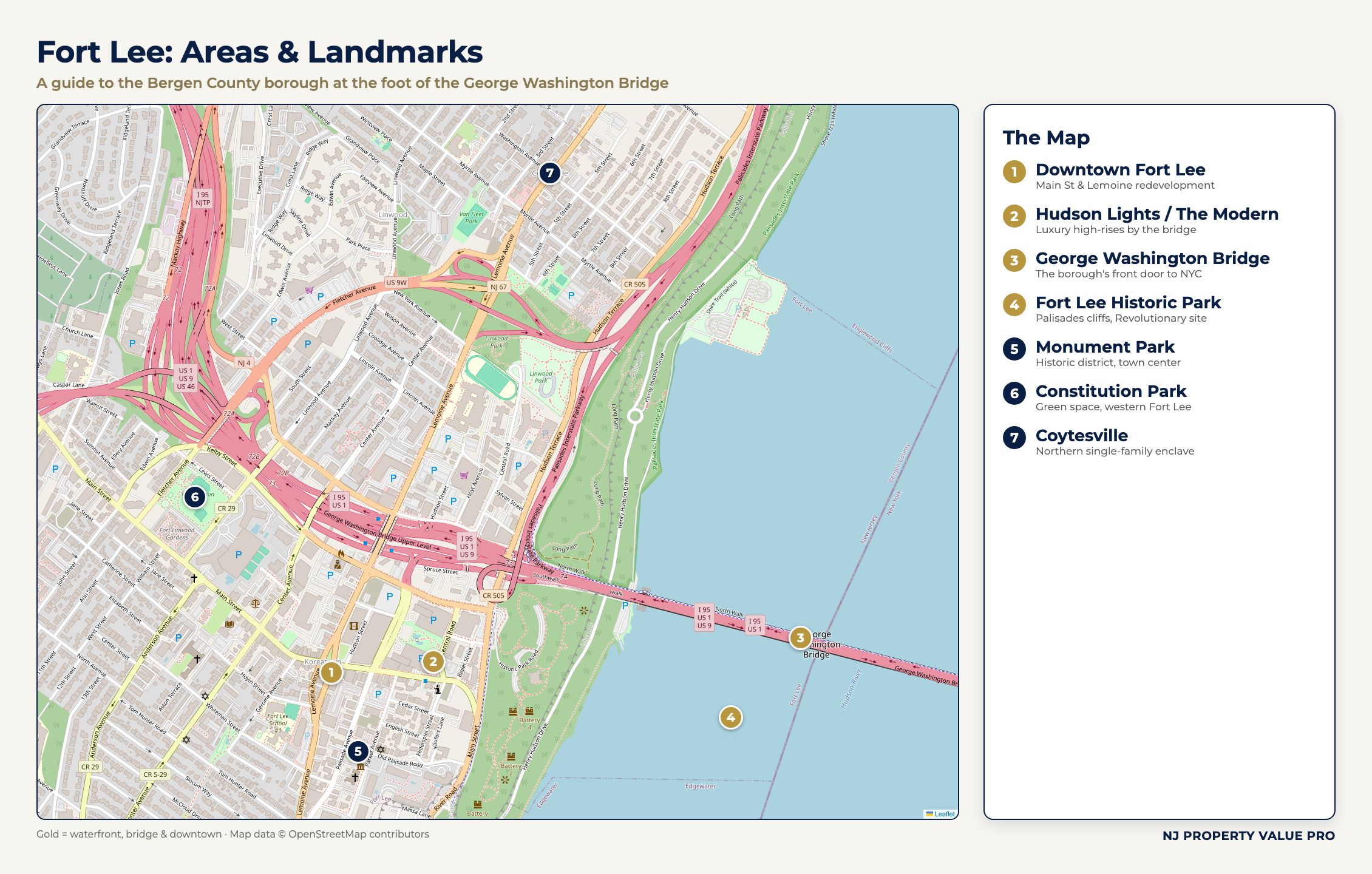
Fort Lee divides into distinct pockets, each with its own character and price point.
The Palisades Waterfront
The eastern edge of Fort Lee runs along the Hudson River cliffs, and this is where the high-rise condo inventory concentrates. Horizon Road is the primary address here, with buildings numbered 1 through 6 Horizon Road dominating the skyline. These towers offer the views that justify Fort Lee's premium tier: unobstructed sightlines to the Manhattan skyline, the Hudson River, and the George Washington Bridge itself.
Units in these buildings range from studios in the low $100s to three-bedrooms pushing past $800,000. The views command the price. South-facing units catch the afternoon sun reflecting off the water. East-facing units wake up to Manhattan. North-facing units look toward the bridge. Each orientation has its advocates.
Anderson Avenue and Palisade Avenue run parallel to the cliffs, hosting additional condo buildings with varying vintages and amenity packages. The newer construction tends to cluster closer to the bridge, while older co-ops dot the streets further south.
Main Street Corridor
Main Street is Fort Lee's commercial spine, running roughly north-south through the center of town. This is where you find the Korean restaurants, the bubble tea shops, the H Mart, and the foot traffic. The density here feels urban. Storefronts turn over regularly. Some blocks have more vitality than others.
The condo inventory along Main Street tends toward older buildings with lower price points. Walk-ups and mid-rises offer entry-level ownership for buyers priced out of the waterfront towers. Studios and one-bedrooms here can still trade below $300,000, though inventory at that price point moves quickly.
Coytesville
North of the commercial district, Coytesville is Fort Lee's residential quiet zone. Single-family homes predominate here, with lot sizes that feel generous by Bergen County standards. The architecture runs from 1920s colonials to 1970s split-levels, with occasional new construction filling in where older homes have been torn down.
Coytesville families send their children to the Fort Lee public schools but live on streets that feel removed from the Main Street energy. Commuters here drive to the bridge or walk downhill to catch the bus. The trade-off is distance from the restaurants and retail, but some buyers want exactly that buffer.
Linwood
South of Main Street, Linwood blends condo buildings with smaller single-family homes. The price points here sit between the waterfront premium and the Coytesville single-family tier. Linwood Avenue itself hosts a mix of residential and commercial uses. The neighborhood feels transitional, not quite the vertical density of Horizon Road, not quite the suburban spacing of Coytesville.
What It Feels Like to Live Here
Daily life in Fort Lee organizes around the commute, the food, and the view. In that order, depending on who you ask.
The Commute Reality
The George Washington Bridge is Fort Lee's defining infrastructure asset and its daily frustration. NJ Transit buses cross the bridge to the Port Authority Bus Terminal, and on a good day, that trip takes 25 to 30 minutes. On a bad day, it takes an hour. Rush hour means the 158 and 159 buses run frequently, but they also run full. Expect to stand.
For drivers, the bridge tolls add up. The GWB charges by time of day, with peak rates during rush hours. Many Fort Lee residents who commute by car develop strong opinions about which lane moves fastest (none of them, but they will argue anyway).
The Port Authority Bus Terminal deposits you in Midtown, within walking distance of Times Square and Herald Square. From there, subway connections fan out across Manhattan. The total door-to-desk time depends heavily on where in Manhattan you work and how you feel about underground transfers.
Some Fort Lee residents skip the bridge entirely and commute via the ferry from Edgewater, one town south. NY Waterway runs service from the Edgewater landing to Midtown and the Financial District. The ferry adds a scenic Hudson River crossing to the commute but requires getting to Edgewater first.
Errands and Daily Rhythms
H Mart anchors the Main Street grocery scene, and if you cook Korean food at home, you will become a regular. The produce section runs deep. The prepared foods counter offers quick weeknight solutions. The parking lot fills on weekends.
For American supermarkets, you drive. Whole Foods sits in Edgewater. Trader Joe's is in Paramus. Fort Lee itself has smaller grocers but nothing competing with the chains on square footage.
The dry cleaner, the nail salon, the barbershop: all of these exist along Main Street in multiples. The commercial density means you can walk most errands if you live centrally.
Banking, post office, pharmacy: all present and functional. Fort Lee has the full municipal service infrastructure of a Bergen County town, just compressed into higher density than you might expect.
Dining and Culture
Fort Lee's food scene centers on Korean cuisine. The Main Street corridor has one of the densest concentrations of Korean restaurants in Bergen County, and the quality runs from excellent to exceptional.
Soju bars open late. Grilled meat spots fill on weekends. The bakeries sell shaved ice in summer and red bean pastries year-round. If you want to learn to cook Korean food, the ingredient access here rivals Koreatown in Manhattan.
The cuisine extends beyond Korean, but that is the anchor. Japanese restaurants share blocks with Chinese takeout, Vietnamese pho shops, and the occasional Italian-American holdout. The variety reflects the corridor's commercial mix.
For fine dining, residents drive to Edgewater or cross the bridge into Manhattan. Fort Lee's restaurant scene optimizes for accessible, repeatable meals rather than special-occasion splurges. That is not a criticism. The Korean fried chicken at 11 PM on a Tuesday serves a purpose.
Fort Lee Historic Park, at the eastern end of town near the bridge, preserves the Revolutionary War history of the Palisades cliffs. George Washington's forces retreated through here in 1776, and the park interprets that history with signage and hiking trails along the cliff edge. The views of the bridge and the river are worth the visit even without the history lesson.
The Palisades Interstate Park runs along the Hudson River cliffs, offering hiking trails that connect Fort Lee to points north and south. The Long Path passes through here for ambitious hikers. The closer trails offer weekend escapes without leaving town.
Parks, Outdoor, and the Waterfront
The Palisades cliffs are Fort Lee's natural asset, and the town leans into them. Fort Lee Historic Park sits at the foot of the George Washington Bridge, combining Revolutionary War interpretation with Hudson River views. The park's trails trace the cliff edge, offering perspectives on the bridge, the river, and the Manhattan skyline that no condo can match.
Constitution Park sits inland, offering playground equipment, sports fields, and picnic areas for families. The park hosts youth soccer and baseball leagues. Weekend mornings bring the expected suburban bustle.
The Hudson River Waterfront Walkway, which runs continuously through Hudson County towns to the south, has segments accessible from Fort Lee. The walkway connects to the Edgewater waterfront and continues south toward Weehawken and Hoboken. For runners and cyclists, this creates a longer route than any single town offers.
Fort Lee's recreation department runs programming year-round: summer camps, senior activities, fitness classes. The community center on Whiteman Street anchors these programs. Participation depends on having kids or being retired, as is true in most suburban towns.
Honest Trade-offs
Fort Lee asks you to accept some realities in exchange for its access and views.
Traffic
The George Washington Bridge creates traffic patterns that Fort Lee cannot escape. Local streets back up during peak commute hours. Route 4 and Route 46 intersect nearby, adding interstate traffic to the mix. If you live on the wrong block, you hear trucks braking at all hours. The bridge approaches run 24/7.
Weekend mornings are quieter. Tuesday at 5:30 PM is not.
Density
Fort Lee's high-rise inventory means thousands of people live on a handful of blocks. The waterfront towers share elevators, parking garages, and amenity decks. You will see your neighbors. Privacy comes at a premium, measured in floor height and unit orientation.
The Main Street corridor adds commercial density to residential. Delivery trucks, restaurant exhaust fans, and pedestrian traffic create a constant low hum. If you want silence, move to Coytesville or keep looking in Bergen County.
Parking
Street parking in the condo districts is competitive. Building garages charge monthly fees that vary by location and availability. If you own two cars in a one-spot building, you learn to negotiate.
Visitor parking is scarce. When family visits for the holidays, they circle or they pay for a commercial lot.
Aging Inventory
Many of Fort Lee's condo buildings date from the 1970s and 1980s. The floor plans reflect their era: smaller kitchens, compartmentalized layouts, fewer closets. Renovation potential exists, but building rules and HOA approval processes add friction.
The newer construction on the waterfront commands premium prices partly because it offers modern finishes and layouts. The older inventory offers value precisely because it is older.
Who This Neighborhood Suits
Fort Lee works for buyers who prioritize access and are comfortable with density.
Manhattan Commuters
If you work in Midtown and want to own rather than rent, Fort Lee offers a value proposition. The bus commute is real but manageable. The PATH train in Hoboken requires a longer initial journey but avoids bridge traffic. Some buyers compare the two towns directly. Fort Lee's prices run lower for comparable square footage, with the trade-off being commute variability.
Buyers Seeking Views
The Hudson River and Manhattan skyline views from Fort Lee's waterfront towers are not available elsewhere at these price points. Weehawken and Edgewater offer similar views but different inventory profiles. For buyers who want floor-to-ceiling windows facing the city, Fort Lee's high-rises deliver.
Food-Focused Households
The Korean restaurant density on Main Street matters if cooking and eating Korean food is part of your household routine. H Mart and the specialty grocers support home cooking. The restaurants support nights when you do not want to cook. This concentration does not exist elsewhere in Bergen County at the same scale.
First-Time Buyers
Fort Lee's condo inventory includes entry points below $300,000, which is rare in Bergen County. Studios and one-bedrooms in older buildings offer a path to ownership for buyers who might otherwise rent indefinitely. The buildings are not glamorous. The units are not large. But the ownership math can work where it does not elsewhere.
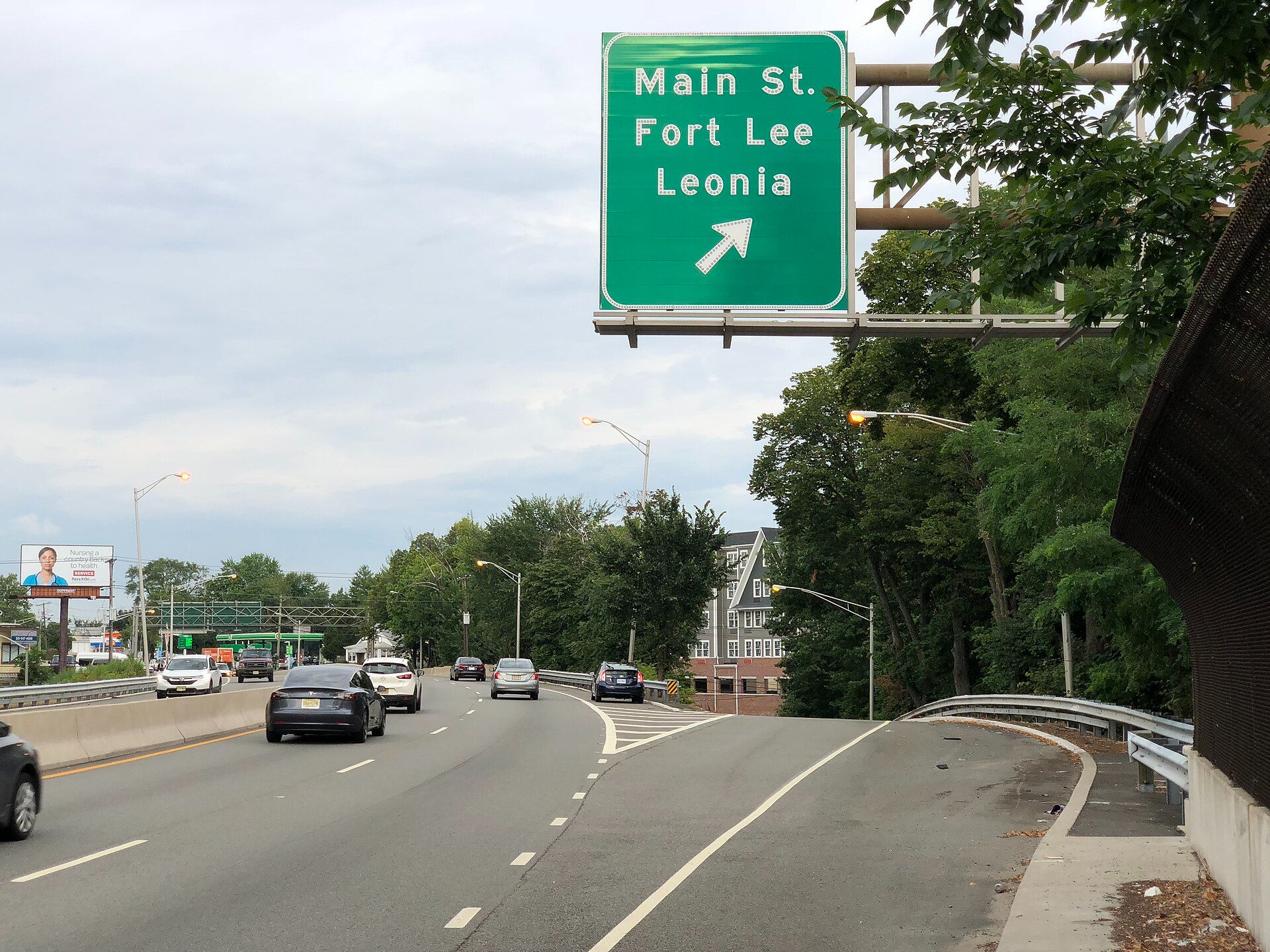 Photo: Famartin / Wikimedia Commons, CC BY-SA 4.0
Current Market Conditions and What Buyers Should Expect
Bergen County's condo and townhouse inventory shows 636 units available as of July 2026, up 24.7% year-over-year. Days on market for these units has stretched to 40 days, up from 33 days last year. The market is not frozen, but it is slower than the single-family segment.
Fort Lee's condo inventory reflects this county-wide pattern. Properties priced well move within the first few weeks. Properties priced above the comparable sales sit longer. Sellers who listed aggressively in spring are cutting prices into summer.
For buyers, this means negotiating room exists on listings that have been active for more than 30 days. The days of multiple offers on every listing have passed in the condo segment. You can take your time, tour multiple buildings, and make offers that reflect the current market rather than last year's pace.
Single-family homes in Fort Lee behave differently. The inventory is smaller, the buyer pool is motivated, and days on market run shorter. Buyers targeting Coytesville should expect more competition and less flexibility than in the condo segment.
For buyers exploring Fort Lee alongside other Bergen County options, our Bergen County property valuation guide breaks down how appraisers assess value in this market.
FAQ
What is the average commute time from Fort Lee to Manhattan?
NJ Transit buses cross the George Washington Bridge to the Port Authority Bus Terminal in 25 to 45 minutes, depending on traffic conditions. Peak rush hour can push that to an hour or more. The 158 and 159 bus lines run the route frequently during commute hours.
Are Fort Lee public schools highly rated?
Fort Lee Public Schools serves approximately 4,000 students across elementary, middle, and high school levels. GreatSchools and the New Jersey Department of Education publish annual performance reports with specific ratings. Families should consult these sources directly for current scores.
What types of homes are most common in Fort Lee NJ?
Condos and co-ops dominate Fort Lee's inventory, concentrated in the high-rise buildings along Horizon Road and the mid-rise buildings along Palisade Avenue. Single-family homes exist primarily in the Coytesville and Linwood sections. The ratio skews heavily toward attached housing compared to other Bergen County towns.
Is Fort Lee NJ walkable?
The Main Street corridor and waterfront condo districts are highly walkable, with restaurants, grocers, and services within a few blocks. The residential sections of Coytesville and Linwood are car-dependent for most errands. Walk Score rates Fort Lee in the mid-70s overall, with significant variation by address.
How does Fort Lee compare to nearby towns like Edgewater or Cliffside Park?
Edgewater sits directly south and offers similar waterfront views with lower density and fewer dining options. Cliffside Park borders Fort Lee to the southwest with more single-family inventory and a less developed commercial corridor. Fort Lee offers the densest combination of transit access, restaurant selection, and high-rise inventory among the three.
What is the rental market like in Fort Lee?
Rental inventory concentrates in the high-rise buildings, with one-bedrooms typically listing between $2,200 and $3,000 per month and two-bedrooms running $2,800 to $4,500 depending on views and building amenities. Turnover is steady. Buildings with doormen and parking command the upper end of ranges.
How much do HOA fees run in Fort Lee condo buildings?
HOA fees vary significantly by building age, amenities, and unit size. Older buildings with fewer amenities may charge $400 to $600 per month. Full-service buildings with doormen, pools, and parking can run $800 to $1,200 or more. These fees are fixed monthly costs and are not negotiable at purchase.
Is Fort Lee NJ a good place to live?
Fort Lee suits buyers who prioritize GWB access, Hudson River views, and walkable Korean dining, and who accept high-density living as the trade-off. Buyers wanting large lots or rural quiet should look elsewhere in Bergen County.
Hero photo: Doc Searls from Santa Barbara, USA / Wikimedia Commons, CC BY-SA 2.0