
Essex County has 22 municipalities, from Newark to Essex Fells, and pricing is set town by town. That is the first thing the best realtor in Essex County NJ for sellers should tell you in November 2026. A list price that fits a center-hall colonial in Livingston says very little about a two-family in Belleville or a Victorian on a Montclair side street. Late fall rewards sellers who price at that level of detail.
Spring still brings the most listings. That said, the buyers touring in mid-November are rarely browsing. January job start dates, lease expirations, and year-end planning put real deadlines behind their offers. Your home also gets compared against a shorter list of competing homes. Is that a guarantee? No. It is an opening for sellers who prepare and price well.
Market references in this guide point to town-level closed-sale data from Garden State Multiple Listing Service and New Jersey Multiple Listing Service. No county-wide medians are quoted, for reasons covered below.
Market Context for Sellers
There is no single Essex County market in late 2026. The county's 22 towns run on different price tiers, housing types, and transit access. Days on market and list-to-sale ratios need to be read for your town and price band, because a county-wide average blends sales that have little to do with your home.
A county figure mixes a Newark two-family, a Short Hills colonial, and a West Orange condo into one number. The figures that matter come from closed sales in your town. Ask for three of them before setting a price: current days on market in your price band, the list-to-sale ratio over recent months, and the number of active listings you would compete against. A ratio at or above 100% means buyers in your band are competing. A ratio under 100% signals negotiating room, and your list price needs to respect it.
Transit shapes much of that local data. Homes within walking distance of NJ Transit stations on the Morristown Line, including South Orange, Maplewood, Millburn, and Short Hills, draw buyers who commute to Manhattan. The Montclair-Boonton Line runs through Bloomfield, Glen Ridge, and Montclair, with stops at Bay Street, Walnut Street, and Upper Montclair. Newark Penn Station and Newark Broad Street anchor the county's rail and PATH connections. Station proximity often shows up directly in comparable sales.
Inventory usually thins after Halloween as some sellers wait for spring. By contrast, buyer urgency often rises. Corporate relocations commonly target January starts, and some buyers want to close before December 31 for their own planning. Sellers have a year-end angle too. Federal law allows up to $250,000 in gain exclusion on a primary residence, or $500,000 for married couples filing jointly, when ownership and use tests are met. Whether a closing lands in December or January changes the tax year it falls in. That is a question for your tax advisor before you sign a listing agreement.
 Photo: Phil Richards / Wikimedia Commons, CC BY-SA 4.0
Preparation
In late fall, preparation comes down to light, warmth, and condition. Sunset arrives near 4:30 p.m. by late November, so a home that shows well in short daylight has an edge. Spend on what inspectors and appraisers will notice, not cosmetic upgrades a buyer may redo.
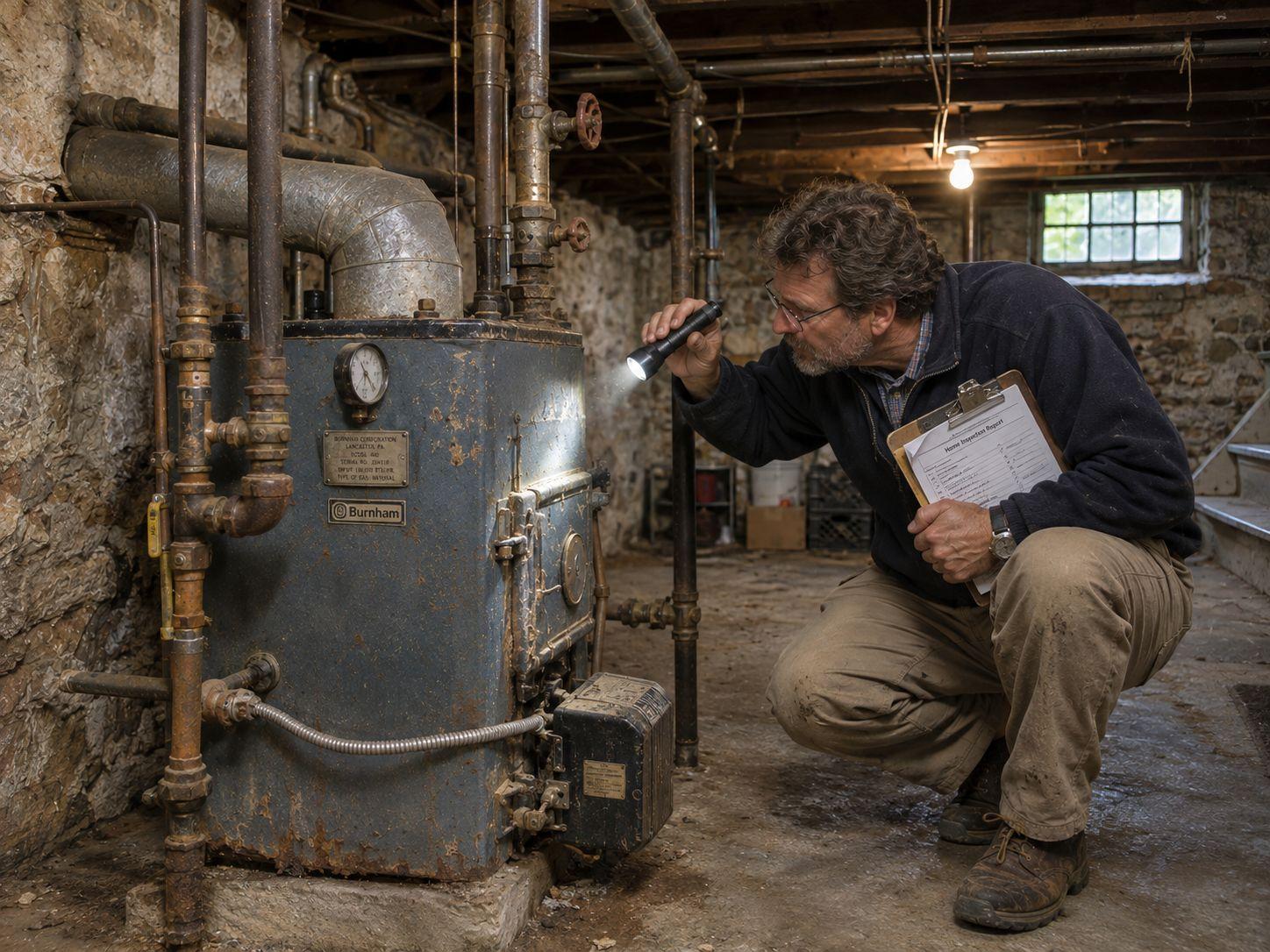
Many Essex County homes date to the early 20th century, especially in Montclair, Glen Ridge, Maplewood, and South Orange. That age brings predictable inspection items. A buyer inspecting in November will run the furnace, so a recent service record matters. Older homes may have had oil heat at some point, and many New Jersey buyers ask for an underground tank sweep. Sellers can consider ordering one before listing. A surprise tank discovered during attorney review costs leverage. One found and documented in advance costs far less.
Municipal paperwork deserves early attention. New Jersey requires a smoke detector, carbon monoxide alarm, and fire extinguisher certificate before a resale closing. Many Essex County towns also require a resale certificate of occupancy or a similar inspection. Requirements and scheduling vary by municipality. A call to your town's code or construction office in week one avoids a December bottleneck when offices run holiday hours.
Curb appeal shifts in the colder months. Clear gutters and walkways of leaves, and make sure exterior lights work, since many showings will happen at dusk. Inside, lamps on in every room and a comfortable thermostat setting help buyers picture winter in the house. Whether to stage is a decision to weigh with your agent based on condition and price tier. Vacant homes and homes with dated furniture tend to benefit most. In practice, major renovations right before listing rarely pay back in a compressed Q4 timeline. Repairs that remove buyer objections usually beat projects that chase style.
Pricing Strategy: How the Best Realtor in Essex County NJ for Sellers Sets a Q4 List Price
Price at the market from the start. In late fall, a home listed above recent closed sales sits while the buyer pool shrinks toward the holidays. Every week on market weakens your position. A list price inside your town's recent comps, adjusted for condition and size, keeps you in the first two weeks of traffic.
Reading comps well means using closed sales, not active listings. An active listing is a seller's hope. A closed sale is what a buyer and a lender's appraiser agreed a home was worth. The useful comps share your town, style, and approximate size, and closed within recent months. Then come adjustments for lot size, bedroom and bath count, updated kitchens and baths, parking, and walking distance to a station. Online valuations skip most of those adjustments, which is why they can miss by a wide margin in older homes. Our comparison of professional appraisals and automated estimates covers that gap in more detail.
Micro-markets drive the comp set. Montclair and Glen Ridge feature Victorians, Tudors, and pre-war colonials, where condition and original detail move value. Maplewood and South Orange pair similar architecture with Midtown Direct rail access. Livingston, Roseland, and the Caldwells lean toward center-hall colonials, split-levels, and newer construction on larger lots, with Route 280 and Route 10 shaping commutes. Nutley, Belleville, and Bloomfield include capes, colonials, and two-families. Newark ranges from the large early-20th-century homes of Forest Hill to the multi-family rowhouses of the Ironbound and the one- and two-families of Vailsburg. Price differences across these towns reflect housing type, lot size, and transit access. Each one needs its own comp set. For one town in depth, see our Montclair seller guide.
Price psychology matters as much as the comps. Buyers search in round-number bands. A home listed at $1,025,000 disappears from every search capped at $1,000,000. Listing just under a common threshold, such as $999,000 or $749,000, can widen the pool.
When does pricing slightly below market make sense? Sellers can weigh it when several similar homes compete in the same band, or when inventory in their price tier is thin enough that a sharp price may pull two or three buyers into the same week. The risk is real. If only one buyer shows up, the low price becomes the ceiling. That decision belongs in a pricing strategy consultation, not a guess.
Appraisal training changes how a list price gets built. Jeffrey DeLucia works as both a Real Estate Advisor and a state-certified appraiser, so the comp grid behind a list price follows the same adjustment logic a lender's appraiser will apply weeks later. That alignment matters most when the contract is signed.
Marketing
Late fall marketing has a narrower window, so the launch has to be complete on day one. Photos, floor plan, description, and showing access should all be ready when the listing goes live. A listing that adds photos in week two has already lost its strongest days.
Photography needs planning around the light. Shoots scheduled between late morning and early afternoon catch the brightest interior light in November. A twilight exterior, with every window lit, can stand out in a search feed full of gray-sky photos. Bare trees also show more of the house, which helps architecture-driven listings in Montclair and Glen Ridge.
Video and floor plans carry extra weight for relocation buyers. A buyer starting a job in Newark or Manhattan in January may tour remotely first. A clear walk-through video and a measured floor plan let that buyer shortlist your home before traveling. Ask any listing agent you interview to show you a recent example.
Exposure goes beyond the portals. Essex County listings are commonly entered in Garden State Multiple Listing Service, and some brokers also cross-list in New Jersey Multiple Listing Service to reach agents working in neighboring counties. Agent-to-agent outreach still produces buyers. A broker open house in the first week puts the home in front of the agents who know which of their clients are ready to move before the holidays. Sellers can also weigh whether to hold a public open house on the Sunday after Thanksgiving. Some buyers tour that weekend specifically because they have time off.
Showings and Feedback Loops
The first three weeks tell you whether the price is right. Showing volume, second visits, and agent feedback are the signals. Reading them early and adjusting quickly protects your position before the holiday slowdown sets in.
Week one. Expect the heaviest traffic. Track the number of showings and the number of second showings. Feedback in week one is mostly about condition and presentation. If several agents mention the same issue, such as a dark room, a smell, or a visible repair item, fix it now. Those notes cost little to address.
Week two. This is when price feedback becomes useful. If showings are steady but no offers arrive, buyers are likely comparing your home to something they see as better value. Ask your agent which listings buyers toured alongside yours. That comparison usually explains the gap.
Week three. A decision point. If showings have dropped off and no offers have come in, the market has answered the price question. A price adjustment in early December, timed before the middle of the month, still catches buyers who want a January closing. By contrast, waiting until after the New Year to adjust often means competing against the first spring listings with a stale days-on-market count.
Feedback is only useful if someone asks for it. A listing agent should follow up with every showing agent within a day or two and report back with specifics, not "they liked it."
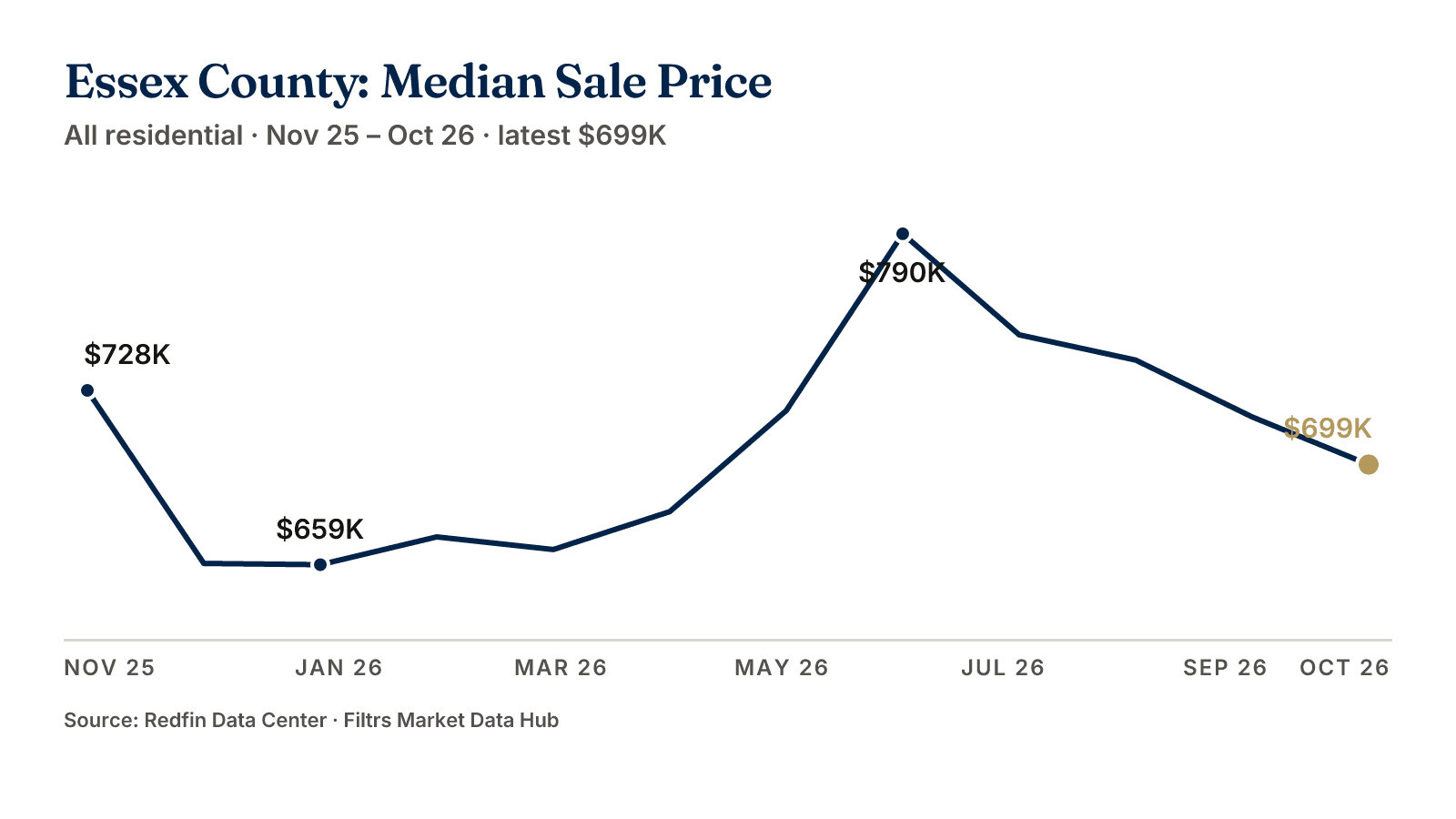
Essex County median sale price — all residential, Nov 25 to Oct 26 (latest $699K). Source: Redfin Data Center.
Offers and Negotiation
The highest price is not always the strongest offer. In late fall, financing strength, contingency scope, and closing timing can matter as much as the headline number, because a deal that falls apart in December rarely relaunches well before January.
Financing is the first filter. A conventional loan with a larger down payment generally carries less appraisal risk than a low-down-payment loan. A cash offer removes the mortgage contingency entirely. Some buyers include an appraisal gap clause, committing to cover part of any shortfall between the price and the appraised value. That clause deserves weight when an offer is above recent comps.
Contingencies come next. Look at the inspection period length, whether the buyer limits requests to structural and environmental items, and the mortgage commitment date. A shorter, narrower contingency is worth real money in a season with fewer backup buyers.
Timing can be a negotiating tool for both sides. A seller who needs to stay through the holidays may value a short post-closing occupancy more than a slightly higher price. A buyer facing a January job start may value a firm closing date. Matching those needs often settles a deal without either side giving up much on price.
New Jersey adds a three-business-day attorney review after the contract is signed. Either side's attorney can propose changes or cancel during that window, so the agreement is not final until review ends. Tone matters here. Past client Nick Russo put it this way: "As a diplomatic mediator, he was able to lower the price we paid for the vacation home, without offending the seller." Keeping both sides at the table is what holds a deal together through review.
Inspection, Appraisal, Closing
Most late-fall surprises in Essex County come from older-home inspection items, low appraisals, and holiday scheduling. Each one is easier to manage when it is anticipated before listing rather than discovered after an offer is accepted.
Inspection findings in pre-war homes follow a pattern. Old oil tanks, knob-and-tube wiring, original cast-iron or clay sewer lines, and aging chimneys show up often in Montclair, Maplewood, South Orange, and parts of Newark. A sewer camera scope is now a common buyer request. Sellers who know the condition of these systems in advance can price for them, repair them, or disclose them with a quote attached. Each option preserves leverage.
Appraisals are the second checkpoint. When an offer comes in above recent comps, the lender's appraiser has to support that number. If the value comes in short, the buyer may ask for a price reduction, bring more cash, or walk away. Sellers with a thin comp set, an unusual home, or a house that is hard to compare can consider a licensed NJ home appraisal before listing. An independent report prepared under USPAP standards shows what a lender's appraiser is likely to see. Our pre-listing appraisal guide walks through when that step pays off.
Closing logistics tighten in December. Attorneys, title companies, lenders, and municipal offices all work around Christmas and New Year's Day. Certificate inspections need to be booked early, and the closing date should leave a buffer before December 31 if the year matters to you. New Jersey sellers also pay the realty transfer fee at closing, so ask your attorney for an estimate early in the process.
Common Seller Mistakes in This Market
The most expensive late-fall mistakes are pricing above the comps, listing before the home is ready, and ignoring early feedback. Each one costs the first two weeks, and in November those weeks are hard to get back.
Pricing to leave room. Some sellers list high, planning to negotiate down. In practice, buyers skip the listing before a negotiation ever starts. The days-on-market count then becomes the story.
Launching unfinished. Missing photos, a pending repair, or a home that is not clean on day one wastes the strongest traffic of the listing.
Trusting an automated estimate. Online valuations cannot see an updated kitchen, a finished basement, or the walk to a Morristown Line station. Pricing from them can miss in either direction.
Ignoring week-one feedback. If three agents mention the same problem, it is not an opinion. It is a pattern.
Pulling the listing over the holidays. Some sellers withdraw in mid-December to relist in spring. That can make sense. It can also mean missing the buyers with January deadlines, then relisting against a full spring market.
Choosing an agent by the highest suggested price. The best realtor in Essex County NJ for sellers shows the comps behind the number. A high suggestion with no closed-sale support often leads to a price cut later.
FAQ
Is late fall a bad time to sell a home in Essex County NJ?
No. Late fall works for sellers who price at the market and prepare the house. Inventory across Essex County's 22 towns typically thins after Halloween, while buyers facing January job starts or lease expirations keep touring. Listing before Thanksgiving on November 26 captures the strongest weeks of that window.
How do I find the best realtor in Essex County NJ for sellers?
No single agent is the top choice for every Essex County home. Interview at least three and ask each for recent closed sales in your town and price band, not county averages. The strongest candidates explain their comp adjustments and their plan for the first two weeks. Appraisal certification adds pricing depth.
Should I price my home lower in fall to attract buyers?
Not below the market, and not above it either. Price inside your town's recent closed sales, adjusted for condition, and consider listing just under a search threshold such as $750,000 or $1,000,000. Overpricing costs more in November than in April because fewer weeks remain before the holiday slowdown.
How long does it take to sell a home in Essex County in Q4?
It varies by town and price band, so ask for current days-on-market data from Garden State Multiple Listing Service. After an accepted offer, New Jersey adds a three-business-day attorney review, and financed closings take several weeks beyond that. A late-November contract often closes in January.
What repairs should I make before listing my home in late fall?
Focus on items an inspector or appraiser will flag: a serviced furnace, working exterior lights, clean gutters, and known roof or plumbing issues. In older homes in Montclair or Maplewood, a pre-listing oil tank sweep and an early check of the smoke and carbon monoxide certificate requirements prevent closing delays.
Do I need a pre-listing appraisal before selling my home?
It is not required, but it helps when comps are thin, the home is unusual, or the sale involves an estate. An independent appraisal prepared under USPAP standards previews what a lender's appraiser will see, which matters most above $1,000,000 or in towns with few recent sales.
What is a typical listing agreement in New Jersey?
A New Jersey listing agreement sets the commission, the listing term, and the marketing terms. Many run three to six months, and every term, including commission, is negotiable. Read the cancellation clause and the protection period, which can cover buyers who toured during the listing, before signing.
How much does an agent make on a $300,000 house?
It depends on the commission in the listing agreement, which is negotiable in New Jersey. Each percentage point on a $300,000 sale equals $3,000. That total is often split between the listing and buyer's brokerages, then shared with each agent's brokerage, so the agent's personal share is smaller.
If you are weighing whether your home belongs in that first pre-holiday window or a spring launch, the answer starts with what your town's closed sales say about your property, and a New Jersey home valuation puts those numbers in front of you.